
New windows are one of the best upgrades you can make to your home. They change how a room feels, how warm it stays and how it looks from the street. There is a style to suit every kind of property, from a Victorian terrace to a brand new build.
Double glazing is not one product. The main types of double glazed windows are casement, flush sash, sliding sash, bay and bow, and tilt and turn, each built for a different kind of property and lifestyle. This guide covers what each style offers and which properties suit it best.
Types of double glazed windows at a glance
| Window style | Best suited to | Key feature | Worth knowing |
| Casement | Most properties, new builds and traditional homes | Slim frames, outward opening | Will not fully replicate a period sash look |
| Flush sash | Period homes and conservation areas | Sash sits flush within the frame for a timber look | Costs more than a standard casement window |
| Sliding sash | Georgian and Victorian properties | Vertical sliding sashes that tilt inward for cleaning | More moving parts means a little more maintenance |
| Bay and bow | Lounges and dining rooms wanting extra space | Three or more angled panes of glass | Needs extra structural support and a bigger budget |
| Tilt and turn | Upstairs rooms, flats and hard-to-reach windows | Dual tilt and turn opening mechanism | Contemporary look suits modern builds more than period homes |
Types of double glazed windows
Casement windows
Walk down most streets in the UK and casement windows are what you’ll see. Hinged at the side and opened outward with a handle, they’re simple to live with and easy to maintain.
We fit our casement windows in uPVC or aluminium, with slim frames that let in plenty of natural light. They suit almost any property, from new-build extensions to traditional semis.
The one thing a casement window won’t do is fully recreate a genuine period sash window, but at Northwich Glass, we can add Georgian bars to your new windows if you’re after that period feel.
Most modern casement windows are “stormproof”: the sash sits slightly outwards of the frame rather than flush, shedding rainwater more effectively. A flush sash window meanwhile sits flat within the frame for a smoother period look.
Flush sash casement windows
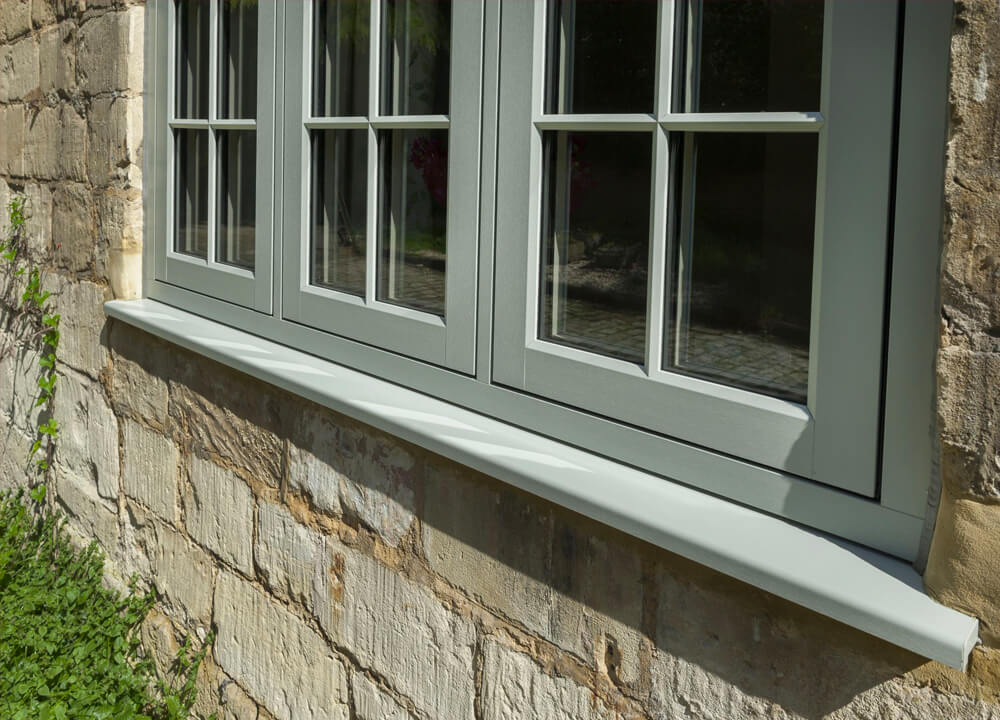
A sash is simply the moving, glazed part of a window, if your home is Victorian or Edwardian, it may once have had timber sash windows sitting flush against the wall. Our flush sash windows recreate that same clean line in uPVC.
Period homes and conservation areas can keep their character without the heat loss of the original single glazing. We build them to reach A+ energy ratings and include multi-point locking for security.
The trade-off is price: the detailed frame makes flush fit windows a little more expensive than a standard casement window.
Sliding sash windows
There’s something satisfying about a sash window that glides rather than swings. Our sliding sash windows move vertically on concealed spring balances, keeping the look that suits Georgian and Victorian properties.
Each sash tilts inward, so cleaning an upstairs room no longer means balancing on a ladder. They’re A rated for energy efficiency, finished in a wide range of colours and woodgrain effects.
More moving parts than a casement window does mean a little more regular maintenance over the years.
Bay and bow windows
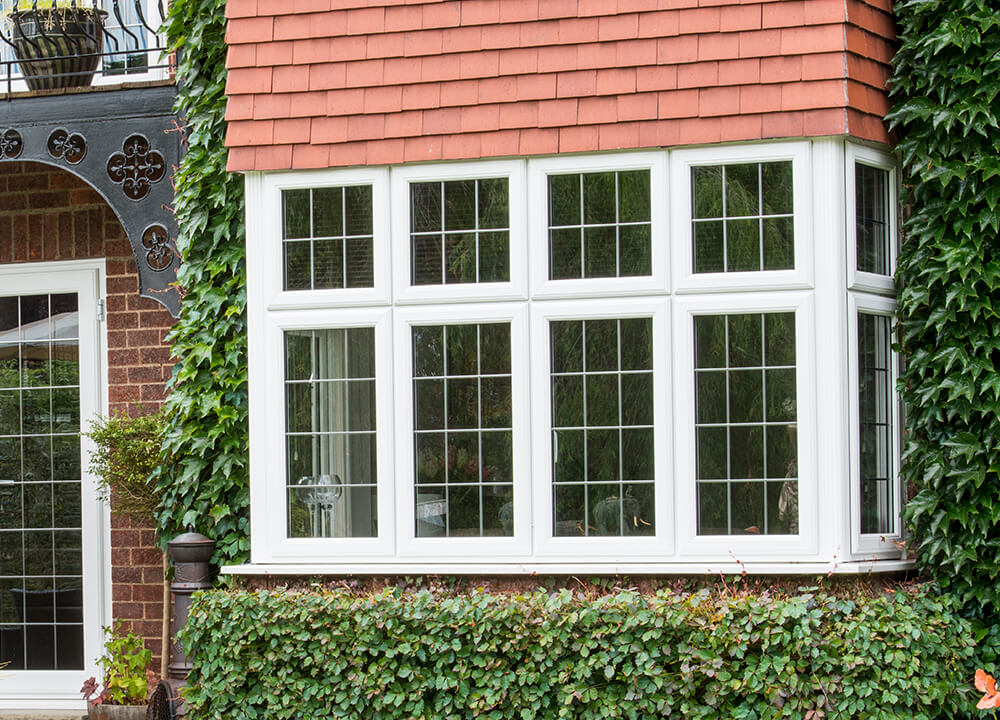
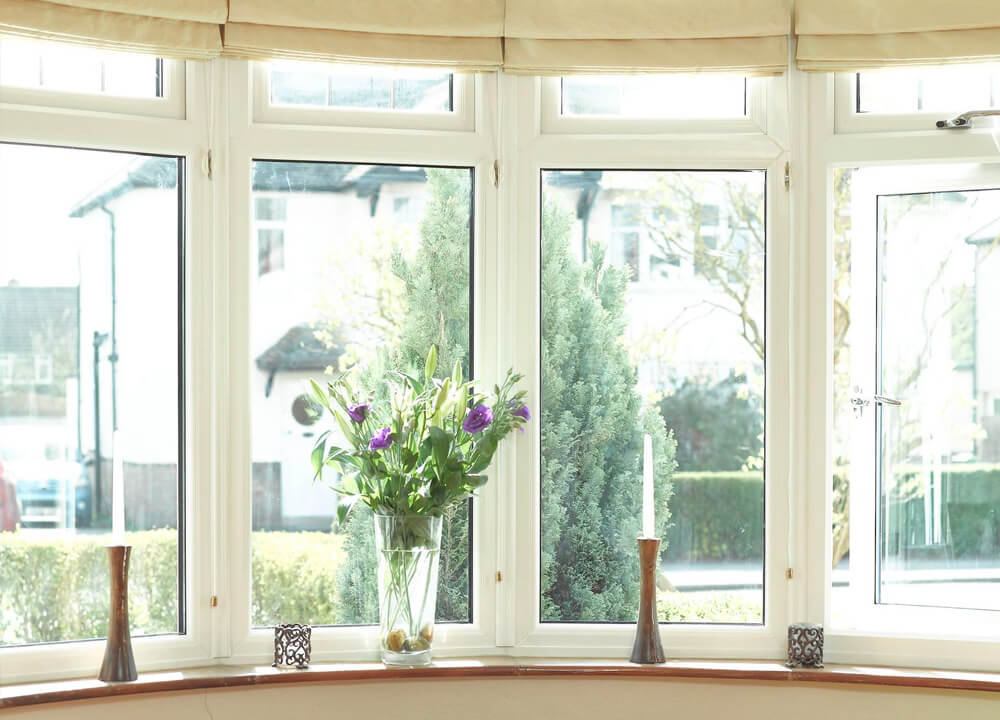
Bay and bow windows do something a flat window can’t: they push the room outward. Three or more panes of glass angle together to draw in natural light from several directions at once, which is why they work so well in lounges and dining rooms.
We build our bay and bow windows in uPVC or aluminium, and they can lift a property’s kerb appeal and its value, often making room for a window seat too.
Because they protrude from the wall, they need more structural support and cost more than a flat window of the same width.
Tilt and turn windows
Tilt and turn windows do two jobs from one handle: tilt inward from the top for ventilation, or turn the handle fully for a wide opening you can clean from inside.
That makes them an ideal option for upstairs rooms, flats and anywhere ladder access is awkward. We fit our tilt and turn windows in uPVC or aluminium, with multiple locking points for security and a tight seal against cold air.
Their contemporary look suits modern extensions better than a period property.
Is triple glazing worth it for UK homes?
Triple glazing adds a third pane and an extra air gap, cutting heat loss further and improving noise reduction. It costs more than double glazing and suits very exposed or noisy properties, but for most UK homes, A-rated double glazing already offers strong energy saving benefits.
See the difference for yourself at Northwich Glass
We’ve been fitting windows and doors across Cheshire for more than 60 years, with trusted team of experts ready to help you with any of your double-glazing queries. Every installation is FENSA registered and comes with a 10-year warranty, so you know you’re in safe hands.
Seeing the frames, glass and finishes for yourself is the best way to choose the right windows for your home, so:
- Visit our Northwich showroom and browse at your own pace
- Call us on 01606 810 000 to chat through your options
- Get a free quote or book a consultation